
Standing as one of the most striking vertical features in Crystal Palace Park, The Lodge has been an unmistakable part of the landscape. Over the decades, it has served many purposes: from athlete accommodation to community hub—and most recently, a building at the heart of complex safety, heritage and regeneration discussions that reflect the challenges of managing historic public buildings in South East London.
The 13-storey accommodation block at the Crystal Palace National Sports Centre, was designed by the London County Council (LCC) Architects Department under the direction of architect Sir Leslie Martin and project architect Norman Engleback and was built between 1960 and 1964 and opened in July 1964.
The Lodge was constructed in 1964 as part of the broader development of the Crystal Palace National Sports Centre (NSC), itself a product of post-war investment in public sporting infrastructure. The NSC was built on the site of the old football ground that had hosted FA Cup Finals from 1895 until the First World War and became a venue for athletics and swimming. The Lodge and its adjoining tower were conceived to provide accommodation for visiting athletes, coaches, and staff involved in events or training camps at the Centre. At 13 storeys high with multiple rooms and communal spaces, it stood as a convenient base for both elite sports people and casual visitors.
For many years, it was more than just functional accommodation: budget travellers, students, and contractors working in London also made use of its affordable rooms. Its presence within the park’s landscape made it a familiar backdrop for both regular visitors and occasional users of the NSC’s facilities.
Despite its long service, concerns began to mount around the safety of the building’s structure—specifically its external cladding. In August 2019, after a formal fire risk assessment, the Greater London Authority (GLA) decided that the building posed an unacceptable risk to occupants due to the fire performance of its cedar cladding. This wasn’t an isolated issue: it reflected a broader post-Grenfell scrutiny of cladding materials on buildings across the UK. As a result, the GLA closed The Lodge with immediate effect and evacuated all residents and upcoming bookings to prioritise health and safety.
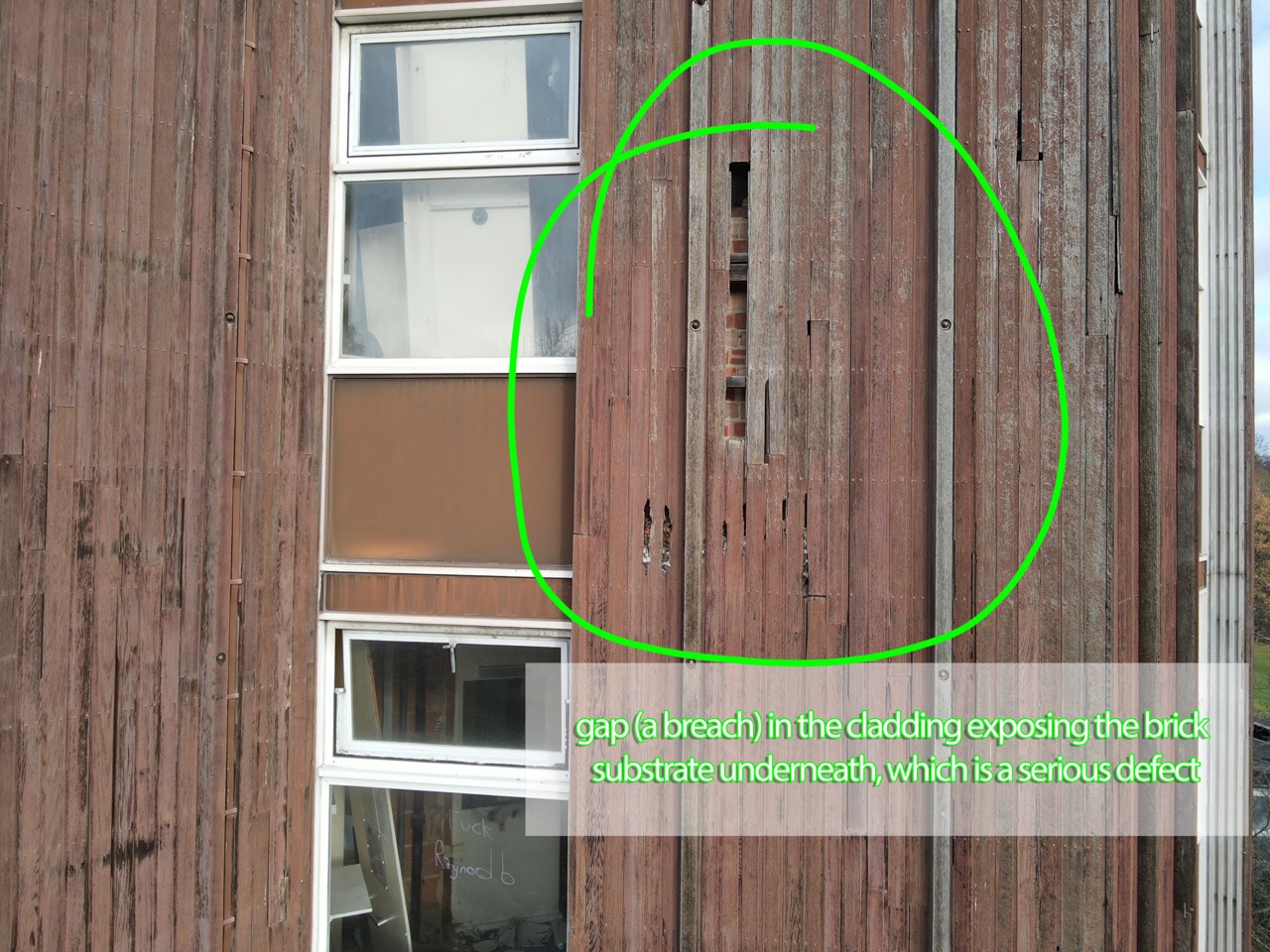
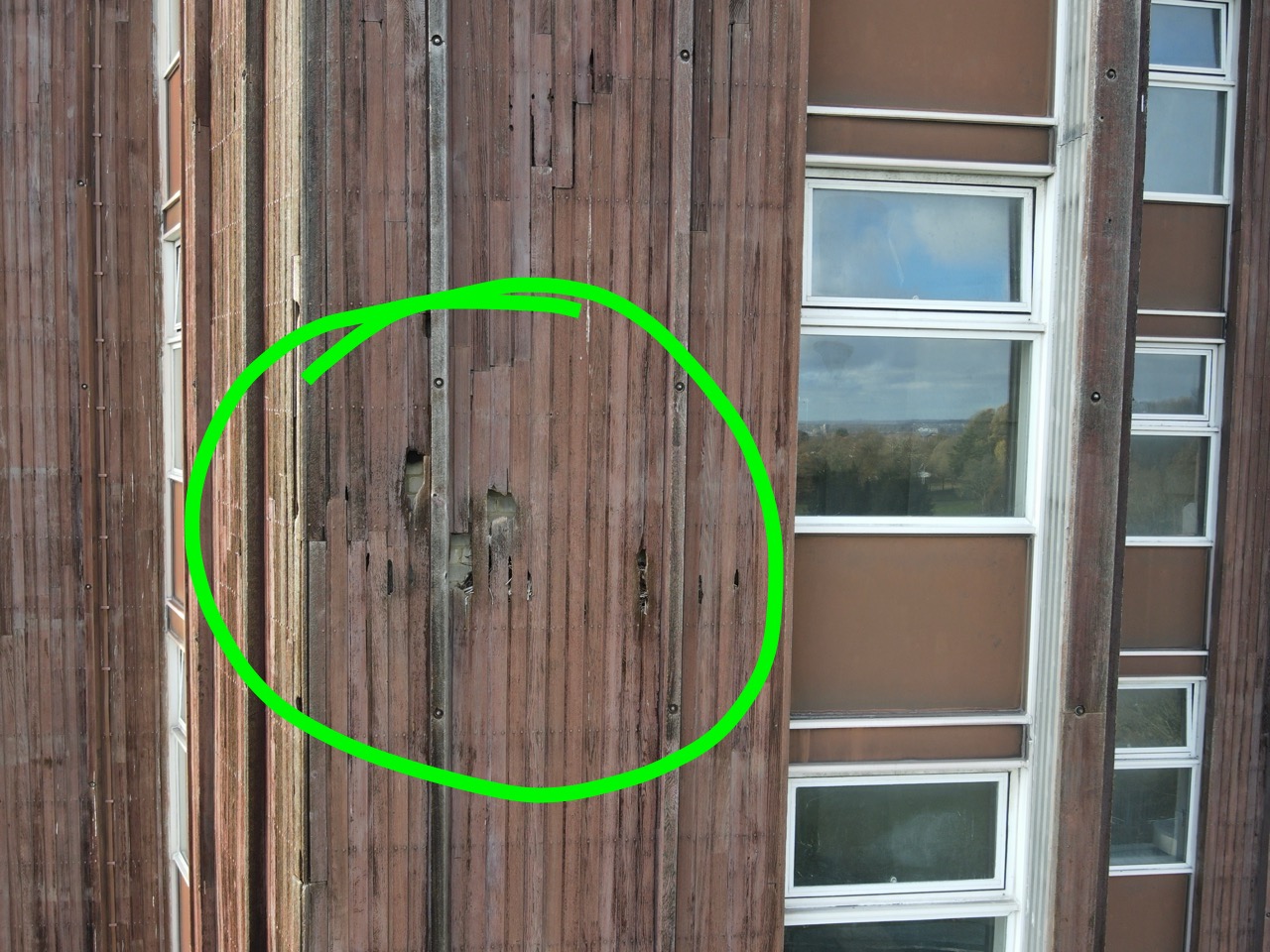
The closure was abrupt and significant. GLL (Greenwich Leisure Limited), which operates the NSC on behalf of the GLA, had to cancel or reallocate accommodation bookings and inform all patrons about alternative arrangements. Since the ground-floor meeting rooms were uneconomic to run in isolation from the rest of the structure, conference and event operations there were also relocated.
Though the word “asbestos” sometimes circulates in discussions of older buildings like The Lodge, in this case the primary official safety concern reported centred on the flammability of the external cladding rather than confirmed asbestos contamination. Nonetheless, older buildings from the 1960s often raise multiple compliance issues under modern safety regimes, and comprehensive refurbishment would inevitably have to address hazardous materials, detailed fire systems, and structural upgrades.
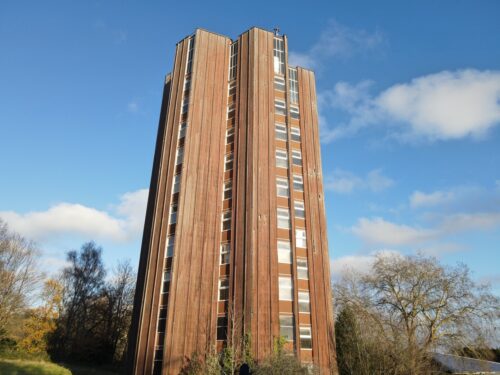
The closure of The Lodge marked the end of an era—not simply for athletes and visitors but also for the local community. Though not a residential block in the usual sense, its evacuation affected long-standing users, tour groups, and clubs that relied on its budget accommodation during training camps and local fixtures.
Staff directly employed in connection with managing The Lodge were also affected: catering services were shifted to other parts of the NSC, and a small number of employees saw changes or reductions in their roles. The GLA recognised that closing the building had financial implications for GLL, since revenue from accommodation and associated activities was lost. The authority subsequently agreed to reimburse GLL for some of these impacts as part of contract variations to reflect the closure.
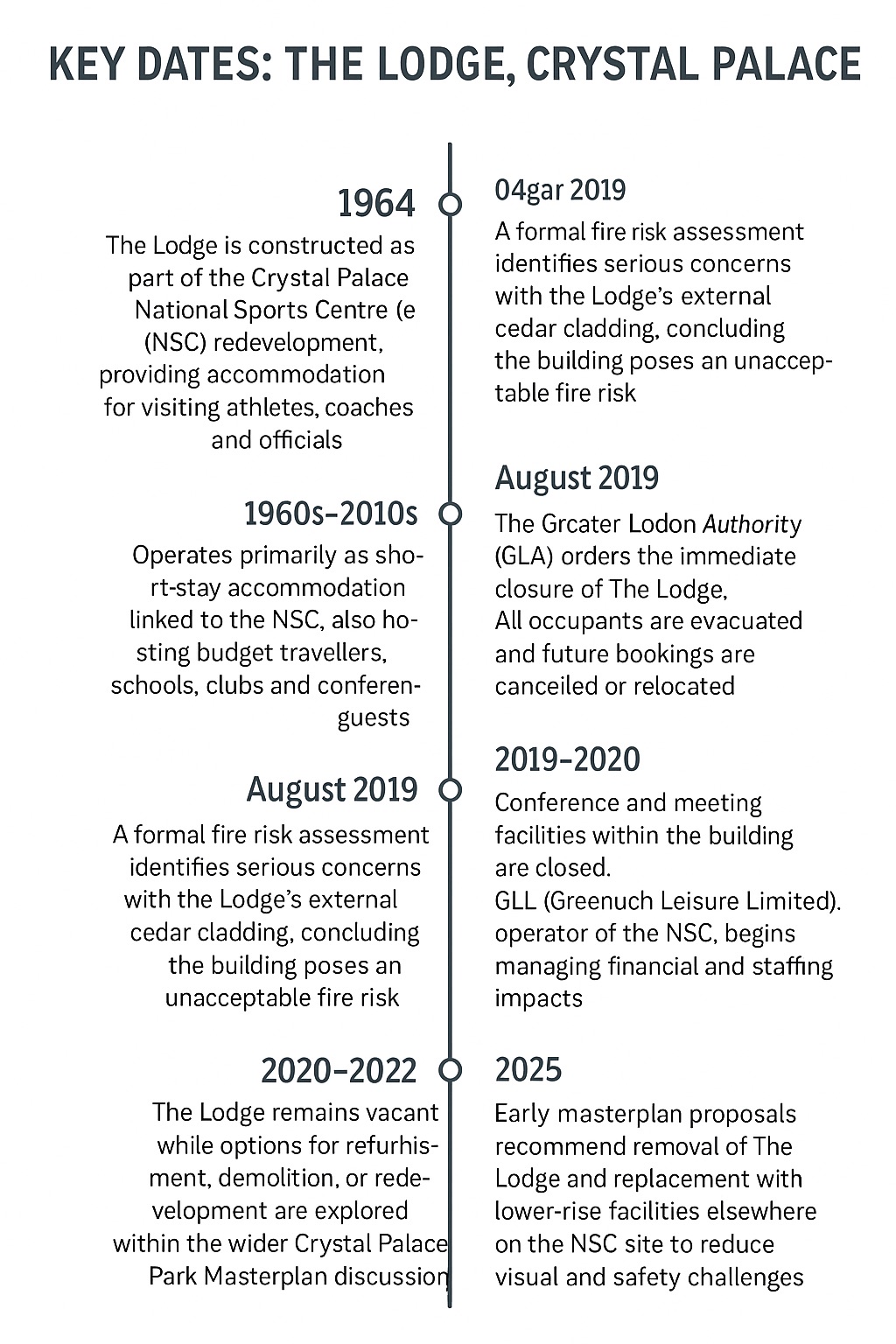
Since The Lodge closed, its future has been the subject of ongoing debate and planning discussions. Early proposals linked to the Crystal Palace Park Masterplan recommended removing the Lodge buildings entirely, consolidating facilities into a new or refurbished “hub” elsewhere on the NSC site, and returning the surrounding area to parkland. These ideas were driven by the scale of refurbishment that The Lodge would require to meet modern standards and the perceived difficulty of retaining such a large tower in a cherished green space.
More recent public consultations associated with the wider redevelopment of the National Sports Centre and park have continued to include The Lodge as a key focus. Masterplans developed by design teams appointed in 2025 envisage a reimagined NSC that integrates new outdoor athletics stadia, indoor hubs for sport and community use, and redesigned heritage areas that respect the park’s Victorian origins and landscape.
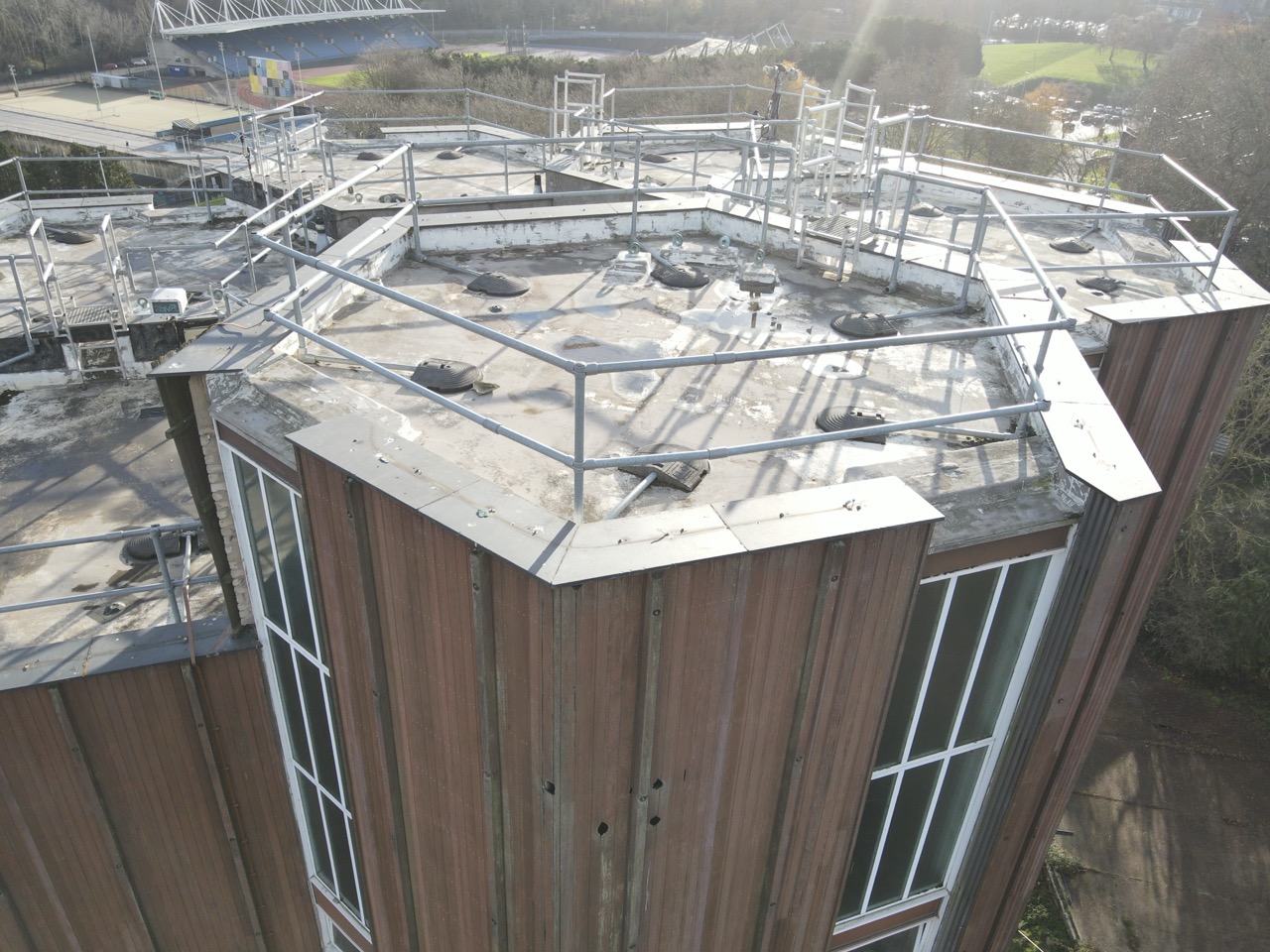
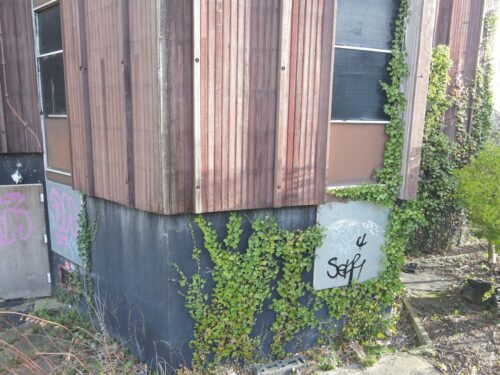
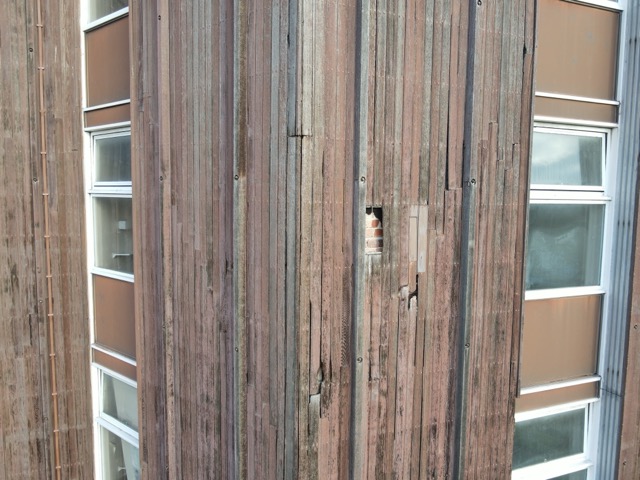
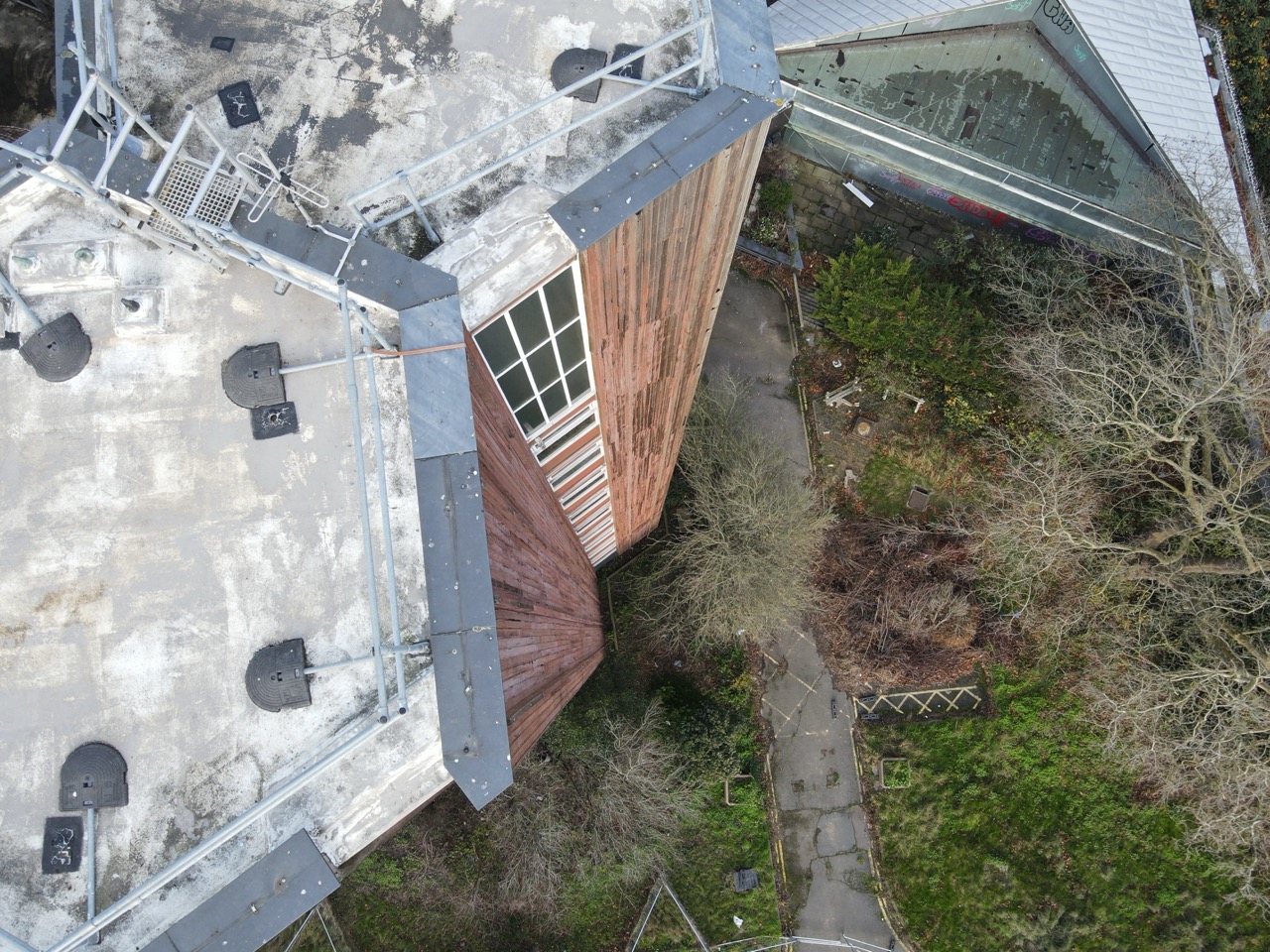
One vision endorsed by local planning advocates, like the Crystal Palace Campaign, suggests replacing the tall tower with low-rise buildings adjacent to Crystal Palace Station to provide temporary accommodation for athletes, school groups, and visitors—alongside possible educational facilities. This approach aims to reduce visual impact on the historic parkland while maintaining the site’s legacy of sporting hospitality.
Today, The Lodge stands as a symbol of both the ambitions and complexities inherent in urban heritage and public space management. Its closure highlighted necessary shifts in safety standards and regulatory systems. The ongoing debates about its future encapsulate broader tensions between preservation, community utility, and landscape enhancement in one of south London’s most iconic green spaces.
Whatever direction is ultimately taken—whether demolition, careful restoration, or creative reuse—the story of The Lodge is inseparable from the evolving narrative of Crystal Palace Park itself: a place continuously shaped by history, public use, and collective vision.
Refurbishment is unlikely
The scale of safety issues—particularly fire risk from cladding and the broader challenge of bringing a 1960s high-rise up to modern standards—makes full refurbishment technically complex and financially unattractive. Any upgrade would need to address fire safety, building systems, accessibility, and likely hazardous materials, pushing costs close to or beyond replacement value.
Demolition is the most strongly signposted outcome
Masterplan documents and consultation responses consistently point toward removal of The Lodge buildings. This aligns with wider ambitions to reduce tall structures within Crystal Palace Park and restore more open parkland.
Replacement with low-rise facilities is favoured
Rather than losing accommodation entirely, proposals suggest relocating athlete and visitor accommodation into new, low-rise buildings elsewhere on or adjacent to the National Sports Centre. This would maintain the site’s sporting function while reducing visual and safety concerns.
Integration into the wider NSC regeneration
Any future works to The Lodge are unlikely to happen in isolation. Decisions are being folded into the broader Crystal Palace Park and National Sports Centre regeneration programme, meaning timing and funding are dependent on that wider scheme progressing.
Heritage and landscape considerations will drive design
Future development is expected to prioritise the historic and landscape value of the park, with a stronger emphasis on green space, sightlines, and community use—factors that work against retaining a large tower structure.
Short-term inactivity, long-term change
In the near term, The Lodge is likely to remain vacant. However, in the longer term, the evidence points toward clearance and redevelopment rather than reoccupation in its current form.
The story of The Lodge at Crystal Palace is a reminder that buildings, like the cities around them, evolve under changing safety standards, public expectations, and economic realities. Once a vital part of the National Sports Centre, the structure now stands at a crossroads—its future tied closely to wider regeneration ambitions for Crystal Palace Park. Whether the site is ultimately cleared, redeveloped, or reimagined, documenting its condition and context remains an important step in understanding how the built environment adapts over time.
This project was captured and documented by HeliDroneSurveys.co.uk, specialists in aerial inspections, building condition surveys, and visual reporting using drone technology. Our work supports architects, surveyors, planners, asset managers, and local authorities by providing safe, cost-effective access to hard-to-reach structures—without the need for scaffolding or disruption on site.
If you require high-resolution aerial imagery, cladding inspections, roof surveys, or time-lapse documentation for complex or sensitive buildings, visit HeliDroneSurveys.co.uk to see how drone-led surveying can deliver clarity, accuracy, and drone inspection
